
High-quality early education starts with high-quality training
Mary Beth Boettcher, NWTC Early Childhood Education lead faculty and director, shares how the College is equipping future educators to support the growth, learning, and wellbeing.

By Mary Beth Boettcher, NWTC Early Childhood Education Lead Faculty and Director
The early years of a child’s life are a critical time for brain development, learning, and emotional growth – that’s why high-quality early education matters. It helps children build important skills like communication, problem-solving, and emotional regulation, skills that shape how children learn, interact, and grow.
Access to early learning programs helps close learning gaps before they begin. Early education teachers, like Elaine Fatla, with specialized training, understand how young children learn and develop, and they are well-equipped to create safe, nurturing, and stimulating environments that support every child’s individual needs. Children who receive quality early education are more likely to graduate from high school, attend college, and become active, contributing members of their communities. Strong early learning helps build stronger, more resilient communities and society for everyone.
Juggling full-time work, running a business, and raising a family, Elaine needed a program that could fit into her busy life. Our flexible online and blended format made it possible for her to pursue higher education without putting everything else on hold. Elaine took advantage of the eight-week online and blended courses and also committed to evening field experience sessions, attending synchronously with her instructors and peers, in addition to completing weekly field placements.
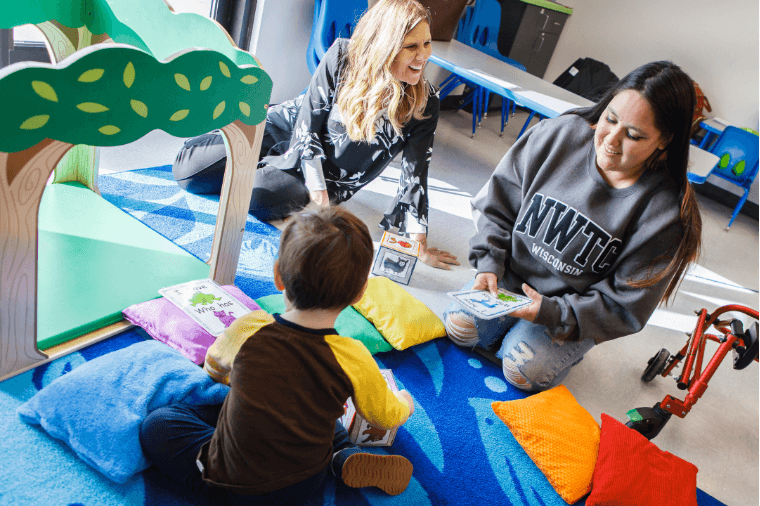
Boettcher, above left, works with a student in the Early Childhood Infant Toddler certificate program.
What truly sets our online program apart is the personal connections we build in our virtual classrooms. For busy students, learning from home without having to delay their education until life slows down makes a big difference. It removes barriers like travel, transportation, and time away from family—making higher education more accessible and achievable.
Through these live virtual field experience sessions, we foster meaningful relationships with our students, which we deeply value. We introduce new concepts, discuss professionalism, and explore topics such as understanding the reasons behind children’s behavior. Students actively share real-world experiences from their work and placements, participate in small group case studies, and learn collaboratively – all within the virtual classroom.
Supporting students in the field is at the heart of NWTC’s Early Childhood Education program. Helping students like Elaine apply what they learn in real-world settings has always been our priority. We’re proud to offer a program that’s not only flexible but also deeply meaningful – and we’re incredibly proud of our students, and graduates.
The Early Childhood Education program at NWTC is known for its high-quality, hands-on approach to preparing students for careers working with young children and families. The program is led by experienced faculty who bring real-world expertise into the classroom, and it offers flexible learning options, including eight-week courses, online and in-person formats, and credential-based pathways. Students gain practical experience through field placements in diverse early learning settings, ensuring they graduate with the skills, confidence, and credentials needed to succeed. With strong community partnerships and a focus on developmentally appropriate practices, NWTC’s program equips future educators to support the growth, learning, and well-being of every child they serve.
When Mary Beth Boettcher looks ahead to her upcoming retirement, she feels mixed emotions. She’s excited to spend more time with family and pursuing her favorite outdoor activities – but she acknowledges the challenge of leaving the college, career, and colleagues she loves.
“It’s hard to let go of something that has been such an important part of my life, but I also recognize that the time is right,” said Boettcher, NWTC’s Early Childhood Education (ECE) program lead faculty and director who is retiring in May 2026.
She was hired nearly 25 years ago to build the College’s ECE associate degree program. Since then, her career has been defined by a passion for teaching and mentorship – leading her team and students with a children-first philosophy that has touched thousands of lives.
“I am inspired to come to work each day because I know the work I do, along with the work of my team, positively influences thousands of very young children,” Boettcher said. “Knowing that the guidance and education we provide can help create better experiences and outcomes for so many children is what motivates me and keeps me passionate about this work.”
Boettcher is also greatly energized by her NWTC colleagues, especially her ECE team.
“I love my team,” she said. “They show up every day committed to working together with one shared purpose: keeping student success at the forefront of everything we do. That shared passion and dedication have made my work not only meaningful, but joyful.”
Boettcher has played a pivotal role in elevating the ECE program’s quality and reputation. Under her guidance, the program completed a rigorous national review and earned accreditation from the NAEYC Commission on the Accreditation of Early Childhood Higher Education Programs – a distinction held by only a handful of early childhood programs in the state. Her leadership not only moved the program through the process successfully but also strengthened its commitment to excellence for students, families, and the field.
“We have always embraced continuous improvement, but accreditation brings a new level of intentionality that results in more engaged, practice-ready students,” she said. “That has always been my motivation, and it continues to be what inspires me each day.”
Now, just months away from retirement, Boettcher reflects on a journey that transformed her own curiosity as a young parent into a lifelong mission. In this Q&A, she shares a few milestones from her career and her thoughts for the next generation of educators.
How have your strengths and interests aligned with your career path?
I’ve always loved being around children, even from a young age, though I never imagined myself becoming a teacher. As a child, I pictured my future as being married and becoming a mother, like my mom. Once I had children of my own, that interest and curiosity became intense, much like what I see in many of my students today. I wanted to understand everything about my baby’s development and behavior, and I wanted to influence my daughter’s life in the most positive ways possible.
At the time, I was working as a dental assistant, but within a few years I made the decision to return to college. That’s when everything changed. Concepts from my high school child-development classes and my UWGB human development and psychology courses suddenly connected with the educational aspects of working with young children. It felt like all the pieces finally came together, and I realized I had found my true passion.
My parents played a major role in encouraging me to pursue this path, and their support gave me the confidence to fully commit to a career that aligned with both my strengths and my genuine love for early childhood education. My husband also stepped in during that time, picking up the slack at home raising three children, while I worked full time and took evening classes, back when online learning didn’t exist. That family support allowed me to grow into the role I was meant to have.
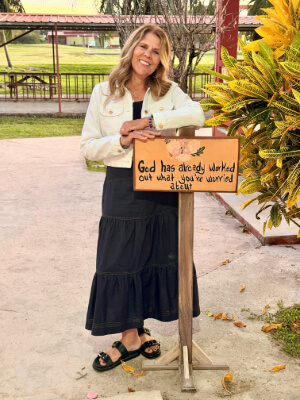
Boettcher stands outside Corozal Junior College in Belize. Earlier this year, she accompanied her students on a study abroad trip, learning about the country’s culture and educational system. (Photo courtesy of M. Boettcher)
Do you see a connection between your early career path and what you're doing now?
Absolutely. When I was working in the childcare field, I truly loved being connected with families and young children. Supporting them, helping children learn and grow, and building relationships that made a real difference were the parts of the job that brought me the most joy. As I moved into leadership roles and directed two large childcare centers, supporting up to 70 employees, those same skills continued to grow. I learned how to guide, mentor, and support adults in ways that ultimately benefited the children in their care.
That experience translates directly into my work at NWTC. As an instructor, I’m still teaching, inspiring, and nurturing others to reach their full potential – only now my focus is on future educators. The impact is multiplied, and the heart of the work remains the same: helping people grow so they can help children thrive and live better lives. I like to think about it as the ripple effect. When we teach teachers how to nurture children, we create a ripple effect that extends far beyond a single classroom. Every child they support carries that sense of safety, belonging, and possibility into their families, their friendships, and eventually their communities. One educator’s skill becomes hundreds of children’s confidence, resilience, and love of learning. Investing in teachers is one of the most effective ways to create lasting, generational change. That’s why we do what we do.
Please share one of your proudest career accomplishments.
One of my proudest career accomplishments has been leading our Early Childhood Education program through the rigorous NAEYC Higher Education Accreditation process, leading to national accreditation. Working alongside a dedicated team of five full-time faculty for so many years has been one of the greatest privileges of my career. Together, we navigated challenges, supported one another, and ultimately pulled together to complete the accreditation self-study, an achievement that truly reflects the collective strength, persistence, and heart of our team.
This accomplishment carries deep meaning for me because NAEYC accreditation ensures we are preparing students with the competencies today’s early childhood employers expect. It aligns outcomes, assessments, and real-world practice in ways that strengthen our graduates and help them enter the field ready to put children first every day. It also deepened our partnerships throughout the community, which directly supports Wisconsin’s early childhood workforce.
As I step into retirement, knowing this work is complete gives me tremendous pride and peace. What brings me the greatest sense of contentment now is knowing that the momentum will continue. The early childhood team at NWTC is strong, dedicated, and passionate, and I have complete confidence that they will continue moving the program forward with the same heart and purpose.
What is one concept you’ve taught that you hope your students will always remember?
I hope my students will always remember they have the power to make things better for the children they work with. I want them to understand how important it is to align their personal and professional values with the values of their workplace, and to never lose sight of the fact that quality truly matters.
Every child deserves to be included, respected, and loved, and parents should always be honored as their child’s first and most influential teachers. When students keep these ideas in mind, it helps them stay humble and grounded, because every child arrives with a life story we may never fully know. As educators, we play an important role in children’s lives, but their home and family remain the deepest influence. Remembering that helps us approach every child with empathy, respect, and an open heart.
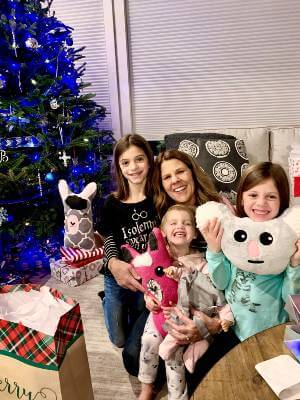

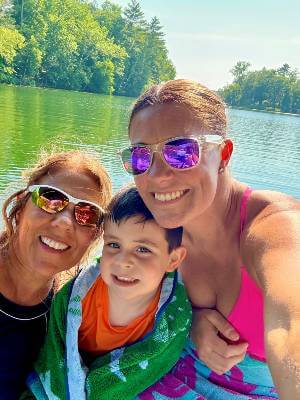
Pictured above, left to right: Boettcher with three of her seven grandchildren and a few of the “stuffies” she made for them; with her husband and all seven grandkids; with her daughter and grandson at the lake. (Photos courtesy of M. Boettcher)
Boettcher is looking forward to doing more of what she loves in her retirement. More time with children and grandchildren, sewing, enjoying the outdoors, traveling with her husband, and simply being together as a family – it’s all part of the plan.
“I love spending time at the lake – running, walking, kayaking, boating, and gardening whenever Wisconsin’s weather gives me the chance,” she said. “I also have a sewing studio that brings me a lot of joy, and I’m excited to spend even more time there in retirement. Both sewing and being outdoors give me a sense of creativity, peace, and purpose.”
“I’m excited for the simple joys,” said Boettcher. “More time with family, more time outside, and more time doing what brings me joy, that’s what I’m looking forward to most.”
Mary Beth Boettcher, NWTC Early Childhood Education lead faculty and director, shares how the College is equipping future educators to support the growth, learning, and wellbeing.

Elaine Fatla set her sights on becoming a champion water-skier at a young age. Today, she focuses on her family, business, and expanding access to quality childcare – a vital issue across the state.
A lot has changed since the beginning of 2020, so we are offering five tips to help you prepare for on-campus learning this fall semester.