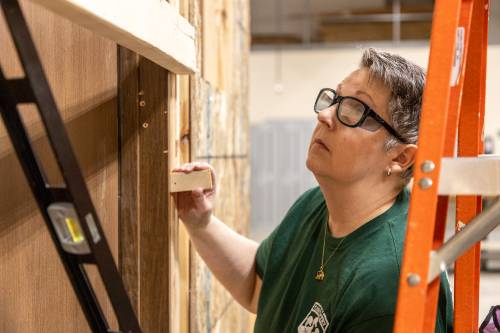
Building a new path
After 30 years in manufacturing, Theresa Schindler enrolled in NWTC's Carpentry program. One of her key drivers is putting homeownership within reach for more people.
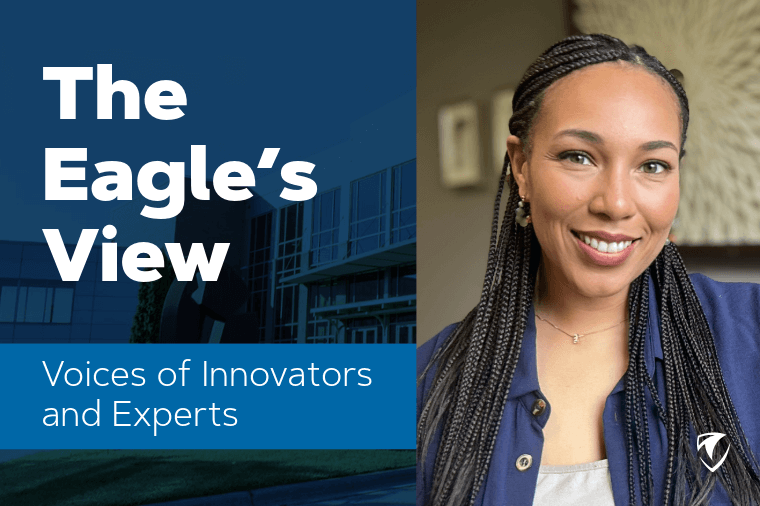
For so many students, the college journey can feel exciting – and overwhelming. That’s where academic advising comes in.
At NWTC, a team of 16 academic advisors are available to meet with students in-person or virtually. Advisors help students with academic planning, class selection, graduation requirements, and much more. Advisors help students build their confidence, find balance, and make sure their education connects to their long-term goals.
“It doesn’t matter if students are right out of high school, or if they’ve been working in industry for 20 or 30-plus years – college is a new beginning. It’s a new step,” said Ericka Wade, NWTC director of Academic, Career, and Transfer Advising. “College adds another role, another hat, another piece of their life.”
In this Q&A, Wade talks about why advising is such an important part of student success and how the College is working to make it even stronger by preparing students for post-graduation success.
Read about the role of advising in Wade’s own college and career journey. See “Anchored in experience, driven to elevate,” below.
I think every student comes in knowing they want to be in college, but not necessarily knowing the steps of how to be successful in college. Academic advisors are right there to help. They focus on building students’ confidence in the steps they need to take, one brick at a time. An advisor is the person a student can go to throughout their entire journey.
Our advisors help students see the potential in themselves – and to look beyond just this semester. What does their future job look like? What does transferring look like? Our advisors help you see it. I know I was helped so much by my academic advisor when I was in college. I don’t know where I would have been without him.
It honestly comes down to work-life balance. Now that is very broad, but it covers a lot. Students have many other roles outside of just being a student. How to balance it all can be so challenging, especially when you’ve never done it before.
What’s important is helping students find a balance – making sure they have a strong academic plan that keeps their momentum, but is also doable for all of the roles they have in their life.
We do a lot of assessing through our coaching model on how confident students are in their program choice. We don’t do that just once at the beginning – we do it throughout the student’s journey.
College is a place for learning about their career field and also life. Students learn things as they develop and grow through college that could change where they see themselves, semester after semester. So we are constantly assessing if their career goals align to the programs they’re in now. Sometimes that changes after students have completed a couple of classes or two, or it might change because they got some hands-on experience, and now they’re thinking bigger and broader than they ever have before.
I get so much joy when a thank you e-mail an advisor receives from a student is forwarded to me! Somehow students know the right time their advisor needs to hear messages like that! The heartfelt thank you or a “I could not have done this without you” message is very affirming. Knowing the personal impact you have on students is what keeps us going, and it’s what keeps us coming back to work every day.
Sometimes students share experiences that aren’t so great, and that’s feedback I take very seriously. I’m thankful for that feedback because it makes us better and keeps us growing. I think without it, we’d become stagnant and unaware of when we didn't get something right.
We’d provide a disservice to our students if we’re not taking every opportunity to improve, grow, and stretch ourselves. As much as I love hearing positive messages and stories, I like to hear about challenging ones, too. That’s the only opportunity for us to provide stronger advising support to our students down the line.
I’m all about continuous improvement, and I’m 100% behind the College’s “NWTC 3.0” strategic vision. We are really digging deep into what it means to transfer advise and provide more holistic career and academic advising. Learn more about the NWTC 3.0 framework, which is part of the College’s strategic plan.
At NWTC, it is important that students think about what post-college success looks like for them. It could be a job; it could be transferring to a four-year college and a job. It could be levels of education they never even considered for themselves. Any direction students choose for themselves is okay, but we would be doing them a disservice if we didn’t explore all their possibilities with them.
We’re talking about preparing them to attend another institution that could be completely different from ours, and what does that look like? Making sure we’re knowledgeable not only in our transfer partners, but our transfer pathways and helping set that expectation for students is at the forefront of my mind. We started digging into that this summer, and we have a plan to keep digging into it because we feel like that is the next step to providing great advising at NWTC.
For Ericka Wade, academic advising is a career field deeply rooted in her own student story.
“I loved school growing up and always thought I’d be a teacher,” said Wade, NWTC director of Academic, Career, and Transfer Advising. “I also really loved music, so when I started college I was a music education major, but once I did my field study, I quickly found out that K12 was not my journey.”
During that time of transition – unsure of her next step, feeling underprepared, and juggling work and school – Wade leaned heavily on her academic advisor.
“I would drop by all the time. I always walked in, and he always saw me,” she said. “I loved talking to him and getting advice. He was so supportive. The more I met with him, I thought, ‘Wow, what a cool job. I think I could do this!' Though the advisor in me now would tell my younger self to schedule an appointment!”
She now sees a clear connection between her childhood dream of teaching and her work in advising.
“It’s teaching in a different way,” Wade said. “Helping to touch student lives by making sure we have an advising program here that is strong, supportive, rooted in coaching, and encouraging students to the end of their journey and beyond that. I definitely see a lot of my younger self in a much better fit than what I thought I would be doing.”
Eight years ago, Wade moved to the area from Milwaukee, drawn by the opportunity to work at NWTC. She had been looking for a challenging and meaningful role where she could directly impact students while continuing to grow as a professional.
“NWTC has definitely been the right place to do that,” she said. “Not only is our work meaningful, but we also get to see it in the community every single day and in really unique and special ways, which I love! The people here are so supportive and smart. I learn so much from them every day – it’s what keeps me coming back.”
Outside of work, Wade embraces creativity and fun. She’s a proud dog and fish mom, an avid cook and baker (one of her creative confections pictured right), and, in her words, has “never met a farmers’ market I didn’t like.”
When it’s time to unwind, she’s likely crafting or de-stressing with her favorite video games.

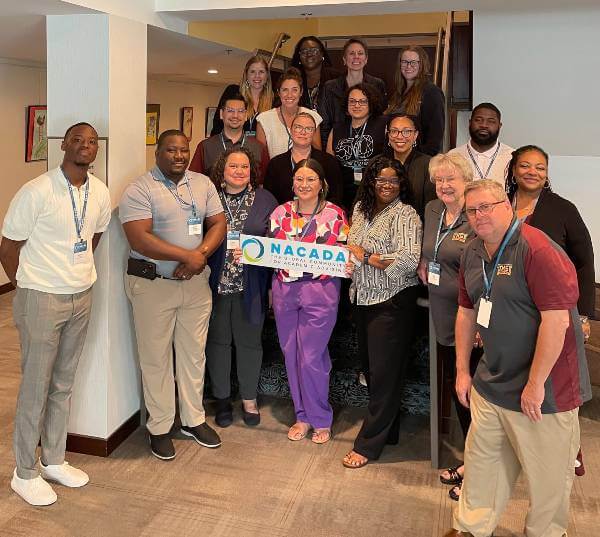
Recognizing her advising expertise, NACADA: The Global Community for Academic Advising invited Ericka Wade to participate in its annual Institute for Academic Advising – in 2024 as a faculty intern and in 2025 as a full faculty member.
“It has been such an honor to share what I know about processes, redesign, strategies, guided pathways, and advising two-year colleges,” she said. “I am there to help coach colleges as they look to change aspects of the advising on their campuses – but I learn as well. There is so much outstanding work being done across the country. I’m privileged to work alongside it and guide it in a small way.
NWTC’s connection to the institute runs deep. Twenty years ago, a small group of advisors attended the institute to create the foundation of academic advising at the College. More recently, another small group went back to work on NWTC’s academic advising redesign.
“The fact that our advising both started and evolved with this institute is very special to me,” Wade said. “You learn as much as you teach, and so I’m very excited and honored to represent the College in this way.”
After 30 years in manufacturing, Theresa Schindler enrolled in NWTC's Carpentry program. One of her key drivers is putting homeownership within reach for more people.
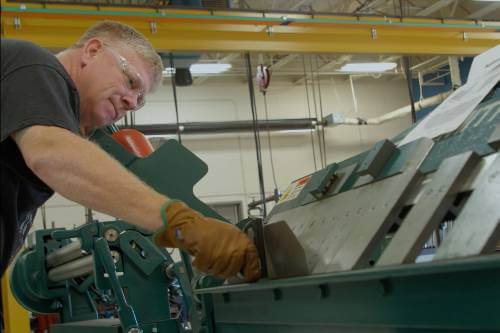
Tim Pigott, a Navy veteran with 23 years of active-duty service, recently graduated from NWTC’s Metal Fabrication program after taking his knowledge to a level he never thought possible.

Balancing work, family, and college, 2026 NWTC graduate Carla Larson is already putting her degree to work by growing her career and continuing toward her bachelor’s degree.