NWTC will join institutions from across Wisconsin in hosting the largest Tiny Earth symposium in the program’s global network of student researchers and attendees. The Tiny Earth in Titletown event – held Wednesday, December 10, 2025, from 4:30 to 7:30 p.m. at Lambeau Field – brings together hundreds of student researchers for a milestone symposium focused on antibiotic discovery.
This community-based symposium is free and open to the public with registration encouraged.
“To host the largest Tiny Earth symposium in the global network is an extraordinary testament to the commitment and passion of our students across the region,” said Angelo Kolokithas, instructor of Biology and program director at NWTC. “Over the past seven years, NWTC has been honored to help expand this effort, and this year more than half of the 218 participants are our students contributing original research. It’s a powerful example of what education can do – students leading in real research, gaining confidence, and helping advance the STEM innovation our community depends on.”
Wisconsin students, including NWTC, St. Norbert College, UW-Green Bay, College of Menominee Nation, Green Bay West High School and more, join 16,000 other students from 300 other colleges and universities across 47 states and 30 countries, in some version of the Tiny Earth course. While uncovering new antibiotics is the end-goal, the discoveries made along the way are worth the effort.
The keynote speaker for the Tiny Earth event is Dr. Fred Appelbaum, a leading figure in hematologic malignancies, known for over 40 years of groundbreaking work. He published the first report showing that autologous transplantation could cure malignant lymphoma and has since advanced the fields of leukemia, immunotherapy and allogeneic hematopoietic cell transplantation. With continuous NIH funding for four decades and over 700 scientific publications, his research has shaped modern cancer treatment worldwide.
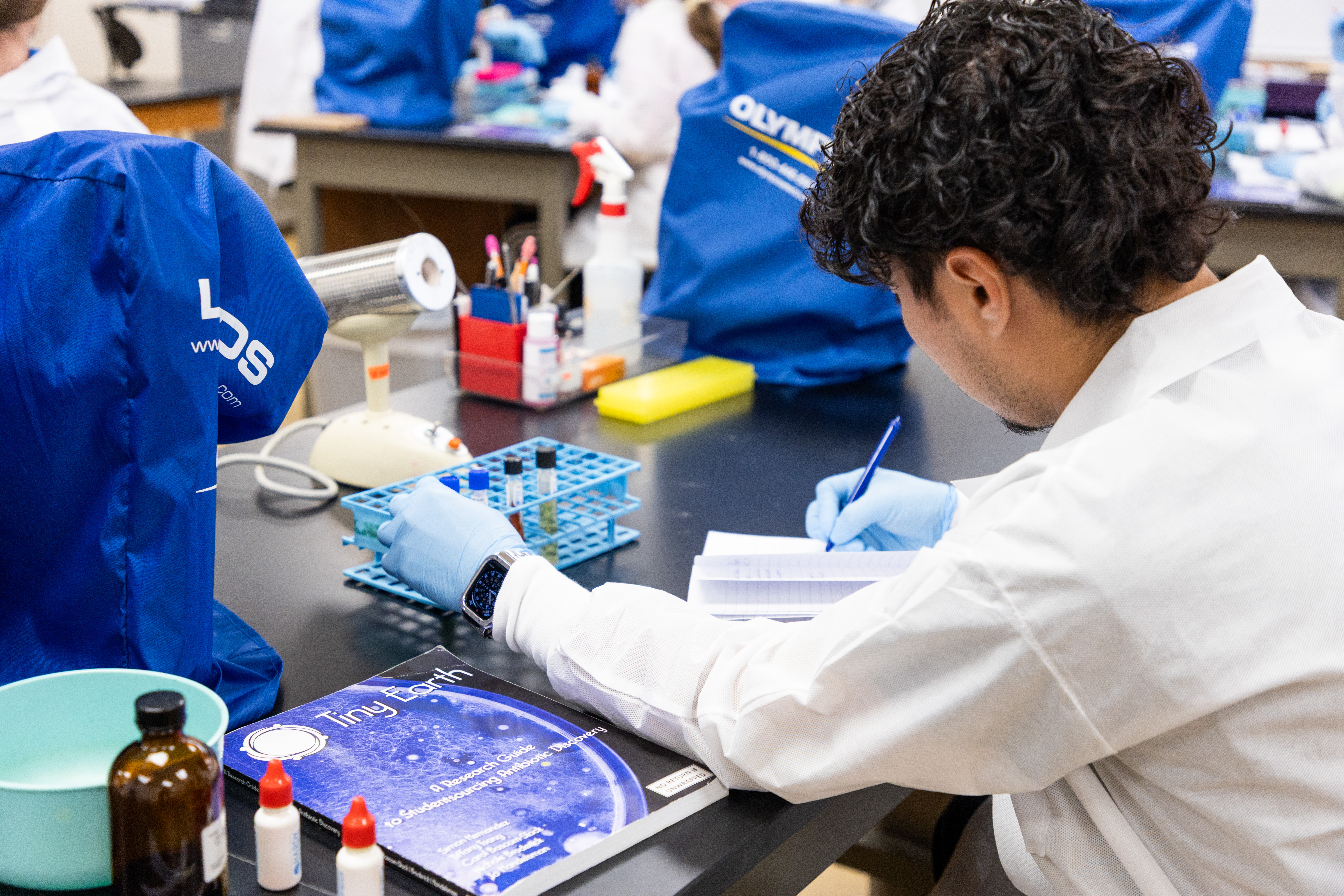
At the beginning of the Tiny Earth course, students collect their own soil samples, isolate bacteria, conduct gene sequence analysis, and participate in research that has the potential to make a global impact. Most importantly, they realize they are part of something bigger than themselves.
"This research has reminded me of why I want to become a physician: to approach every patient with the same commitment to understanding and determination to find answers," said Haylie Dumoulin, human biology and psychology double major at UW-Green Bay.
Tiny Earth’s global network of educators teach a course-based undergraduate research experience (CURE), a form of active learning that offers a scalable way for all students to obtain research experience in college, thereby leveling the playing field and closing the gap for students from historically excluded communities. According to the World Health Organization, in the U.S., more than 2.8 million antimicrobial-resistant infections occur each year. The course provides students with the opportunity for original thinking and scientific discovery of new antibiotics to address the world crisis of antibiotic resistance, thereby capturing the very aspects of science that inspire students to pursue STEM careers.
"I already see how this ties into my future, as a CNA, I see many of the infections we study in class," remarked Alexa Kallies, nursing major at NWTC. "Understanding what causes them and how they’re treated will help me so much when I become a nurse."
"While searching for new antibiotics in soil bacteria, students at Northeast Wisconsin colleges are practicing some of the most important workforce skills needed for science: lab skills, collaboration, creativity, problem-solving, and dealing with failure," said Sarah Miller, Tiny Earth Executive Director. "Every science experiment requires all of those things, and Tiny Earth students practice them repeatedly.”
Please see the 2025 Tiny Earth website for registration and program details, and be inspired by the next generation of scientists and healthcare professionals as they address the global health crisis of antibiotic resistance.